Enhancing Your Reputation: 6 Ways Data Security Can Build Your Customers’ Trust
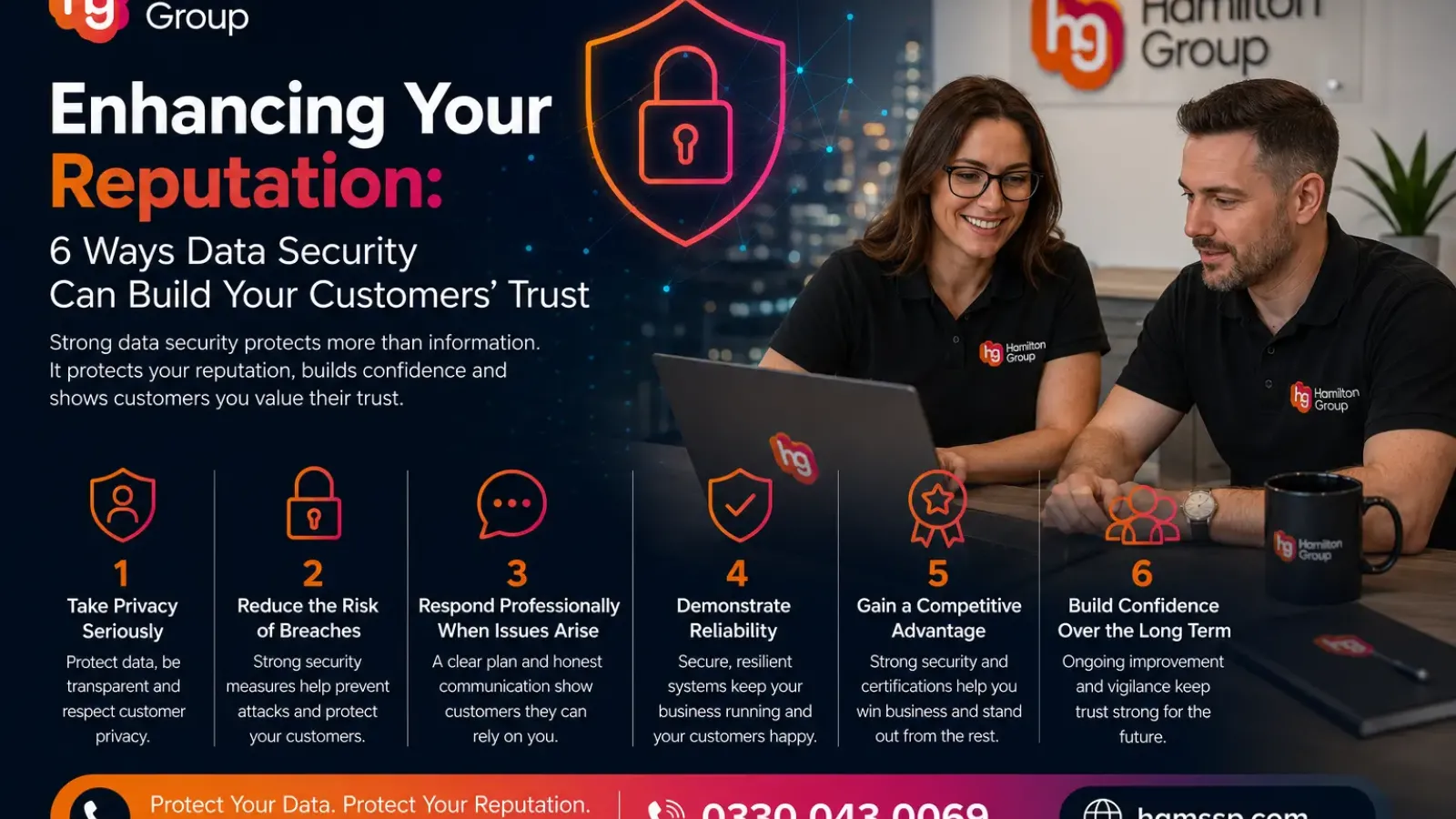
Customers expect businesses to protect their information.
Whether you hold names, email addresses, payment details, financial records, employee information or confidential documents, people trust you to keep that data secure and use it responsibly.
When that trust is damaged, the consequences can extend far beyond the immediate cost of a cyber incident. Customers may leave, prospects may choose a competitor and your organisation’s reputation may take years to rebuild.
Strong data security is therefore not only an IT responsibility. It is an important part of customer service, business development and brand protection.
Here are six ways effective data security can strengthen your reputation and build lasting customer trust.
1. It Shows That You Take Customer Privacy Seriously
Customers want reassurance that their personal information will not be misused, exposed or shared without permission.
By putting clear data protection policies and security controls in place, your business demonstrates that privacy is taken seriously.
This includes:
- Collecting only the information you genuinely need
- Restricting access to authorised employees
- Encrypting sensitive data
- Using secure systems to store and transfer information
- Retaining data only for as long as necessary
- Explaining clearly how information will be used
Customers are more likely to trust organisations that are transparent and responsible with their data.
A strong privacy culture shows that your business values people, not just transactions.
2. It Reduces the Risk of Embarrassing Data Breaches
A data breach can quickly become a reputational crisis.
Customers may receive phishing emails, have their details published online or discover that confidential information has been accessed by criminals.
Even when the financial impact is limited, the damage to confidence can be significant.
Strong security measures help reduce this risk. These may include:
- Multi-factor authentication
- Endpoint protection
- Secure backups
- Email security
- Regular software updates
- Network monitoring
- Access controls
- Staff awareness training
No business can guarantee that an incident will never happen. However, customers are more likely to trust an organisation that can demonstrate it has taken reasonable and proactive steps to protect them.
3. It Helps You Respond Professionally When Something Goes Wrong
Trust is not determined only by whether an incident happens. It is also shaped by how the business responds.
A slow, confused or secretive reaction can make the situation much worse.
A well-prepared organisation should have an incident response plan that covers:
- Who investigates the incident
- How affected systems are contained
- How data is recovered
- Who communicates with customers
- When regulators or insurers must be contacted
- How updates will be provided
- What steps will prevent the issue from happening again
Customers appreciate clear, honest and timely communication.
A professional response can reassure them that the situation is being managed and that their interests remain a priority.
4. It Demonstrates Reliability
Customers rely on your systems being available when they need them.
A ransomware attack, server failure or cloud outage can prevent employees from accessing important information or delivering services.
Frequent disruption creates doubt about whether your business can be trusted.
A strong data security and resilience strategy helps maintain reliable operations through:
- Automated backups
- Disaster recovery planning
- Business continuity procedures
- Secure cloud services
- System monitoring
- Tested recovery processes
- Redundant connectivity where appropriate
Reliability is a major part of reputation.
Customers may not see the technology behind your service, but they will notice when systems are unavailable, deadlines are missed or communication breaks down.
5. It Gives You a Competitive Advantage
Businesses are increasingly being asked to demonstrate how they protect information.
Prospective customers may request security policies, compliance evidence, cyber insurance details or certification before signing a contract.
This is particularly common in regulated industries and supply chains where businesses handle sensitive or confidential data.
Strong security can help you stand out by showing that your organisation is:
- Well managed
- Professionally operated
- Prepared for cyber threats
- Serious about compliance
- Capable of protecting customer information
- A lower-risk supplier
Certifications such as Cyber Essentials can provide additional reassurance and help support tender responses or supplier assessments.
Security is no longer simply a technical consideration. It can influence whether a customer chooses your business at all.
6. It Builds Confidence Over the Long Term
Trust is built through consistent behaviour.
Customers want to know that security is not treated as a one-off project that is forgotten after installation.
Regular reviews, employee training, monitoring and improvement show that your organisation remains committed to protecting information as threats evolve.
Long-term security activities may include:
- Reviewing access permissions
- Removing old accounts
- Testing backups
- Updating security policies
- Monitoring suspicious activity
- Carrying out vulnerability assessments
- Training employees
- Reviewing suppliers
- Testing incident response plans
These actions help keep security aligned with changes in your business, technology and customer expectations.
A business that continuously improves its security posture is more likely to retain customer confidence.
Data Security Is Part of Your Brand
Your reputation is shaped by every interaction customers have with your business.
A secure login process, a professional privacy notice, reliable systems and careful handling of information all contribute to how your organisation is perceived.
Poor security sends the opposite message. It can suggest that the business is disorganised, careless or unprepared.
Data security should therefore be viewed as an investment in your brand.
It helps demonstrate that your organisation is dependable, responsible and worthy of trust.
How Hamilton Group Can Help
Hamilton Group helps businesses protect their data, strengthen their cyber security and build more resilient IT environments.
We can support your organisation with:
- Managed cyber security
- Microsoft 365 protection
- Multi-factor authentication
- Endpoint security
- Secure backups
- Disaster recovery
- Employee awareness training
- Security monitoring
- Cyber Essentials preparation
Our aim is to help you reduce risk while giving your customers confidence that their information is in safe hands.
To discuss how Hamilton Group can help protect your reputation and strengthen customer trust, call us on 0330 043 0069.