The Future of IT: What the Next Generation Need to Know
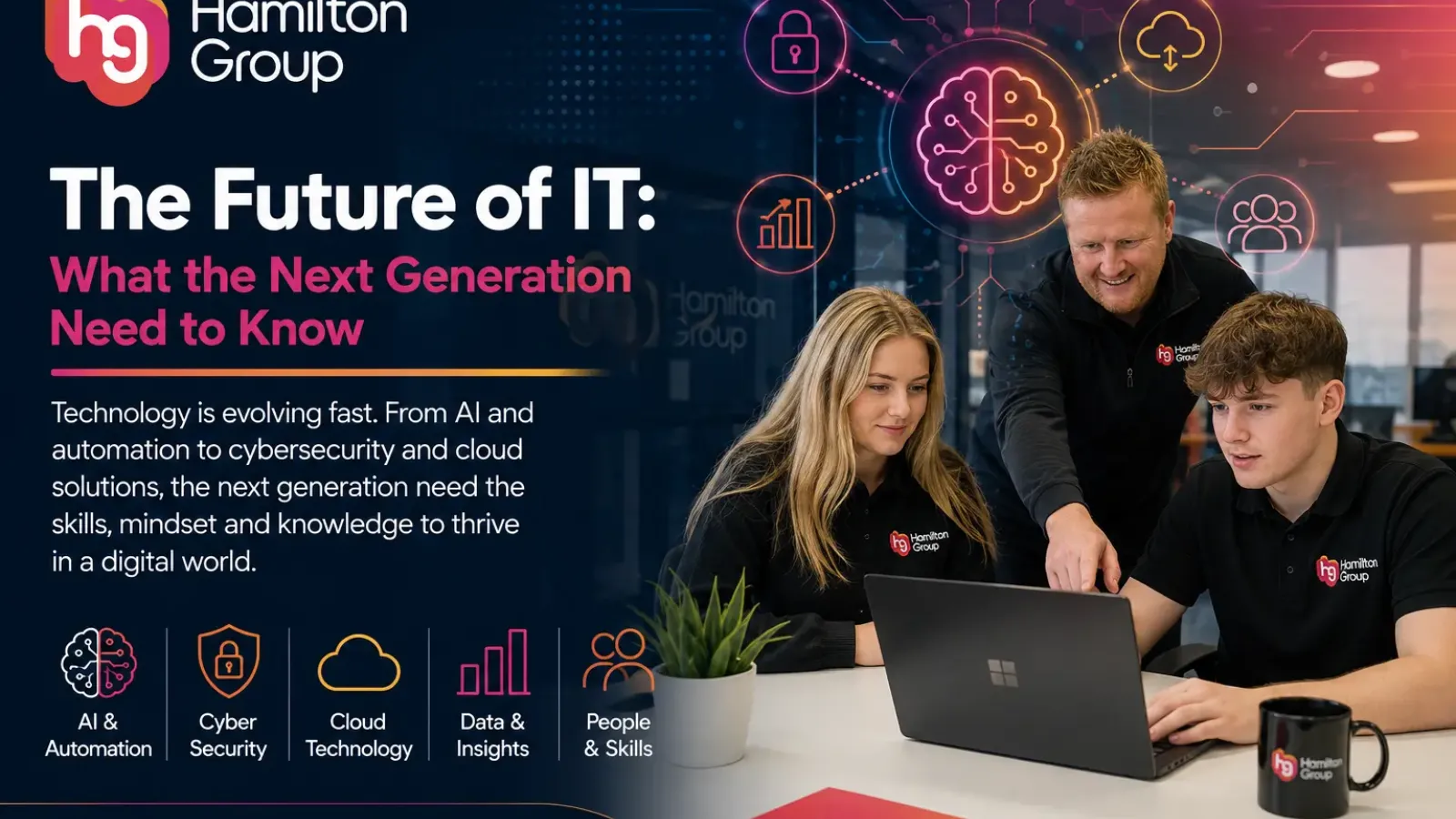
Technology is developing at an extraordinary pace. Artificial intelligence, automation, cloud computing and cybersecurity are already changing how businesses operate, and the next generation will enter a workplace where digital skills are expected in almost every role.
However, the future of IT is not simply about learning how to use the latest software or becoming an expert programmer.
The most successful people will understand how technology supports businesses, how to use it responsibly and how to continue learning as systems evolve.
Whether someone is considering a career in IT or simply preparing for the modern workplace, there are several important lessons the next generation need to understand.
IT Will Be Part of Almost Every Career
Technology is no longer limited to an organisation’s IT department.
Modern businesses rely on digital systems for:
- Communication
- Customer service
- Finance
- Marketing
- Manufacturing
- Recruitment
- Project management
- Data analysis
- Cybersecurity
- Remote working
This means digital confidence will become increasingly valuable across almost every profession.
An accountant may use automation to process financial information. A marketing team may use artificial intelligence to analyse customer behaviour. A healthcare organisation may rely on cloud platforms to manage records and communicate securely.
The next generation may not all become IT professionals, but almost everyone will need to understand how to work effectively with technology.
Artificial Intelligence Will Change How Work Is Completed
Artificial intelligence is likely to become a normal part of everyday working life.
AI tools can already help employees draft documents, analyse information, summarise meetings, generate ideas and automate repetitive tasks. As the technology develops, businesses will find new ways to use it across different departments.
However, AI should not be viewed as a replacement for human judgement.
The next generation need to understand how to:
- Give AI tools clear instructions
- Review AI-generated information
- Check facts and identify mistakes
- Protect confidential business data
- Recognise bias or unreliable outputs
- Use AI ethically and responsibly
People who simply copy and paste information from AI tools without checking it could create serious risks for their employer.
Those who combine technology with critical thinking, creativity and professional judgement will be far more valuable.
Cybersecurity Will Be Everyone’s Responsibility
Cybersecurity is sometimes treated as a technical issue that only concerns the IT team.
In reality, employees are one of the most important parts of an organisation’s security.
A single weak password, suspicious email attachment or accidental data disclosure could place an entire business at risk.
The next generation need to develop strong cybersecurity habits from the beginning of their careers, including:
- Using strong and unique passwords
- Enabling multi-factor authentication
- Recognising phishing emails
- Protecting company information
- Keeping devices updated
- Reporting suspicious activity
- Following security policies
- Avoiding unapproved applications
Cybersecurity awareness should become as natural as locking a door when leaving a building.
Employees do not need to become security experts, but they do need to understand that their actions matter.
Cloud Technology Will Continue to Grow
Many organisations are moving away from relying entirely on physical servers located in their offices.
Cloud platforms allow businesses to access applications, files and services through the internet. This can make it easier to support remote working, improve collaboration and scale technology as the organisation grows.
Microsoft 365, Azure, Google Cloud and Amazon Web Services are examples of platforms that are likely to remain important in the future of IT.
The next generation should understand the basic principles of cloud technology, including:
- Where data is stored
- How access is controlled
- Why identity security matters
- How cloud services are backed up
- The difference between local and cloud-based systems
- The importance of managing subscriptions and licences
Cloud skills will be particularly valuable for anyone interested in careers involving IT support, cybersecurity, software development or business systems.
Automation Will Change Entry-Level Work
Many traditional entry-level tasks involve repetitive administration.
Automation tools can now complete some of these tasks faster and with fewer errors. Examples include processing forms, sending notifications, updating records and transferring information between systems.
This does not mean entry-level opportunities will disappear completely. However, the nature of those roles is likely to change.
Young people entering the workplace may be expected to:
- Identify inefficient processes
- Help design automated workflows
- Check automated results
- Manage exceptions
- Improve existing systems
- Work alongside digital tools
Platforms such as Microsoft Power Automate and Power Apps are making automation more accessible to employees who are not professional developers.
Understanding how processes work may become just as important as knowing how to complete them manually.
Data Skills Will Become Increasingly Valuable
Businesses collect large amounts of information, but data is only useful when it can be understood and acted upon.
The next generation should learn how to interpret information, recognise patterns and communicate findings clearly.
This does not mean everyone needs advanced mathematical or programming skills.
Useful data skills may include:
- Understanding spreadsheets
- Creating clear reports
- Checking data quality
- Building simple dashboards
- Identifying trends
- Asking the right questions
- Explaining findings to others
Tools such as Microsoft Excel and Power BI can help employees turn complex information into practical business insights.
People who can combine technical understanding with commercial awareness will be particularly valuable.
Technical Skills Alone Will Not Be Enough
A person can have excellent technical knowledge and still struggle in the workplace if they cannot communicate effectively.
IT professionals often need to explain complicated issues to people who do not have a technical background.
The next generation should develop skills such as:
- Communication
- Problem-solving
- Teamwork
- Patience
- Time management
- Customer service
- Critical thinking
- Adaptability
A successful IT support technician, for example, needs to understand technology, but they also need to listen carefully, reassure users and explain solutions clearly.
Technical knowledge may help someone secure an interview. Strong people skills can help them build a successful long-term career.
Learning Will Never Really Stop
One of the biggest lessons for anyone entering IT is that the learning process never ends.
Technology changes too quickly for someone to learn one system and rely on that knowledge throughout their entire career.
Operating systems are updated. Cyber threats change. New platforms appear. Older applications reach the end of support.
The next generation need to become comfortable with continuous development.
This may involve:
- Completing professional certifications
- Attending training courses
- Testing new tools
- Reading technical guidance
- Learning from colleagues
- Building practical experience
- Reviewing mistakes
- Keeping up with industry changes
The ability to learn, adapt and remain curious may become more important than knowing one specific technology.
Qualifications Are Useful, but Experience Matters
Degrees, apprenticeships and industry certifications can all provide valuable knowledge.
However, employers also look for practical evidence that someone can apply what they have learned.
Young people interested in IT can build experience by:
- Creating a home lab
- Helping a charity or community group
- Completing work experience
- Building a small website
- Practising with virtual machines
- Learning basic networking
- Exploring Microsoft 365
- Creating an automation project
- Documenting technical work
- Contributing to collaborative projects
Even small projects can demonstrate initiative, curiosity and problem-solving ability.
It is also important to document what was learned, what went wrong and how the problem was solved.
Ethics and Privacy Will Matter More
Technology can create enormous opportunities, but it can also be misused.
Artificial intelligence, facial recognition, data analytics and employee monitoring all raise questions about privacy, fairness and responsibility.
The next generation will need to think beyond whether something can be done technically.
They should also ask:
- Should it be done?
- Is the data being used fairly?
- Have people given appropriate consent?
- Is the system secure?
- Could the technology cause harm?
- Who is responsible when something goes wrong?
Responsible technology use will become increasingly important as regulations and public expectations continue to develop.
Sustainability Will Influence IT Decisions
Businesses are paying greater attention to energy use, waste and environmental responsibility.
Technology has an important role to play.
Cloud systems, energy-efficient equipment, remote support and smarter device management can help businesses reduce unnecessary travel, power consumption and electronic waste.
The next generation should understand the environmental impact of technology, including:
- How long equipment should remain in use
- When devices should be repaired or replaced
- How old hardware should be recycled
- How data centres consume energy
- How technology can reduce wider business waste
Future IT decisions will increasingly need to balance performance, cost, security and sustainability.
What Careers Will Be Available?
The future of IT is likely to offer a broad range of opportunities.
Potential career areas include:
- IT support
- Cybersecurity
- Cloud engineering
- Software development
- Data analysis
- Artificial intelligence
- Network engineering
- Business systems
- Automation
- Project management
- Technology consulting
- Digital compliance
Not every role will require advanced coding skills.
Some people may focus on managing projects, supporting users, analysing business needs or helping organisations adopt new technology.
There is no single route into the industry.
What Should Schools and Businesses Be Teaching?
Traditional computer skills remain important, but the next generation need broader preparation.
Useful learning should include:
- Cybersecurity awareness
- AI literacy
- Cloud fundamentals
- Data protection
- Digital communication
- Problem-solving
- Responsible technology use
- Basic automation
- Collaboration
- Critical thinking
Businesses can also help by offering work experience, apprenticeships, mentoring and opportunities to observe how technology is used in real working environments.
Exposure to real business challenges can help young people understand that IT is not just about computers. It is about helping people and organisations work more effectively.
Preparing for a Technology-Driven Future
No one can predict exactly how technology will develop over the next ten or twenty years.
However, several things are already clear.
The next generation will need to be digitally confident, security-conscious and willing to continue learning. They will need to work effectively with artificial intelligence while still applying human judgement. They will also need to understand that technology decisions can affect privacy, security, customers and wider society.
The future of IT will not belong only to the people who know the most technical terms.
It will belong to those who can adapt, solve problems, communicate clearly and use technology responsibly.
How Hamilton Group Can Help
At Hamilton Group, we help businesses prepare for the future by developing secure, reliable and practical technology environments.
From managed IT support and cybersecurity to Microsoft 365, cloud solutions and long-term IT planning, we help organisations make better use of technology while preparing for future risks and opportunities.
We also believe it is important to support the next generation and help young people understand the wide range of careers available within the technology industry.
To discuss your organisation’s future IT requirements, call Hamilton Group on 0330 043 0069.